
Hippo Hunts In Africa
Hippos are an Aggressive, Dangerous, and a Much Prized Trophy that Challenges Hunters
HIPPO HUNTING
Hippo hunting is one of Africa’s most exhilarating and demanding big-game pursuits, offering hunters a rare opportunity to engage with one of the continent’s most powerful and misunderstood animals. At WildLux Safari, we provide a fully guided, ethical, and professionally managed hippo hunting experience that prioritizes safety, precision, and respect for wildlife conservation. This hunt is ideal for seasoned hunters seeking a challenging adventure in Africa’s riverine landscapes.
The hippopotamus may appear slow and docile while resting in the water, yet it is among the most dangerous animals in Africa. With incredible speed, immense strength, and a protective nature, the hippo commands caution and deep respect. Successful hippo hunting requires a combination of patience, accuracy, and expert guidance. Our team of professional hunters and local trackers brings years of field experience, understanding hippo behavior and the unique dynamics of hunting near water.
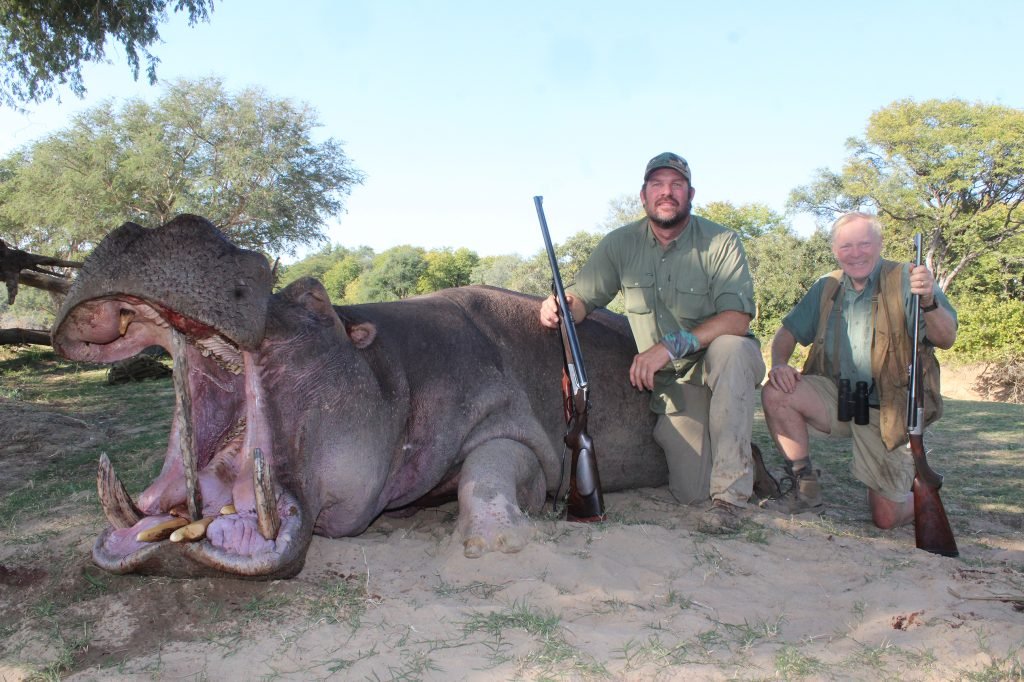
At WildLux Safari, safety is paramount. Hippos are known for their territorial nature, especially when they feel threatened or when calves are nearby. Our trained team ensures that each stalk and approach is executed with caution, providing hunters with a secure yet thrilling experience. After a successful hunt, we assist with trophy recovery, processing, and export arrangements, making the entire experience seamless and rewarding.
Size and Appearance
When preparing for a game hunting safari, it is important to remember that most of the time your target will be in the water, with only the top of their head visible. Hippos have a large barrel-shaped body, with short, stubby legs and tails. Its body color is a mixture of greyish to muddy-brown colors, with a pale pink underbelly. The hippo has a large head, which at times is all you can see when it lies submerged in water and this makes it very difficult to differentiate between a male and female hippo. When game hunting in Africa, and you are at the stage of needing to identify the target’s gender, remember that male hippos are larger and their teeth and tusks are larger than females, which makes identification a bit easier when only the head is visible! Hippos have large tusks in both jaws, representing the upper incisors and the lower canines, with 36 teeth in total. Their sharp tusks can grow up to a foot long and actually never stop growing. They are used by hippos to fight other males and used in defence when attacked. They are strong swimmers and as adults can stay submerged for up to five minutes at a time before having to surface for air.
Hunting Methods
Hippos remain a popular species for dangerous game hunting in Africa and they are hunted in three main methods. The first way is by quietly sneaking along the water’s edge until you spot a suitable trophy bull and then an accurate shot is needed to harvest it. Keep in mind that the hippo will sink and hunters will be required to wait for the hippo to rise and return to the surface, which may take up to an hour or two. The second method is much the same as the first, but this time the hunter will be in a boat and not on foot. The added adrenaline and danger come with the knowledge that hippos are not only very aggressive and dangerous but also fully capable of capsizing the vessel. The last option for harvesting a hippo is to try to intercept it while it travels from its water-based habitat to dry land for feeding. They leave their resting waters, where they spend close to 80% of their time, near dusk, and return in the morning, which would result in a night hunting opportunity.