The Black Rhino stands as one of Africa’s most iconic and powerful species, a symbol of strength, resilience, and ancient wilderness. With its unmistakable hooked lip and formidable stature, the Black Rhino has captured the imagination of adventurers, wildlife enthusiasts, and conservationists around the world. Today, its story is not only one of incredible natural heritage but also of urgent protection. At WildLux Safari, we provide guests with a rare and meaningful opportunity to explore the world of the Black Rhino through ethical, conservation-centered tracking experiences that highlight the importance of safeguarding this critically endangered animal.
For decades, the Black Rhino faced devastating population declines due to poaching and habitat loss. These majestic creatures once roamed widely across Africa, but their numbers dropped dramatically as demand for rhino horn surged on the international black market. While the species still remains critically endangered, dedicated conservation efforts across Southern and Eastern Africa have led to remarkable progress. Many protected areas have achieved steady population growth through anti-poaching initiatives, controlled monitoring, and community-driven conservation programs. It is within these safe environments—carefully managed and legally protected—that WildLux Safari conducts its specialized Black Rhino tracking experiences.
Our approach prioritizes education, responsibility, and respect. Rather than promoting harmful or extractive activities, we offer guests the chance to observe these incredible animals within their natural habitat while learning about the scientific and community-based efforts that sustain their survival. Guided by professional wildlife experts and experienced rangers, every excursion is designed to ensure minimal disturbance to the rhinos while maximizing your understanding of their behavior, ecology, and conservation status.
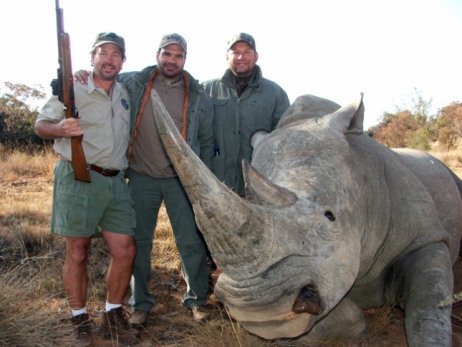
Female black rhinos are smaller than their male counterparts, with the males standing 55-71 inches at the shoulder. The rhino has a tough, gray hide, that protects them from sharp vegetation as they browse and forage. It has a pointed upper lip which it uses to grasp leaves, twigs, and branches as it eats. The black rhino has two horns on its nose, the front one being longer and reaching up to 22 inches, while the rear horn is shorter. These horns are made of keratin and aid the rhino in digging for food, aiding in defense against attackers as well as establishing dominance within the herd. Rhinos are renowned for their exceptional sense of smell, good hearing, and poor eyesight. Their ears have a wide range of movement, allowing them to detect sounds in the area, while their sense of smell allows them to easily gauge when a predator is close by.
Hunting a rhino in Africa is the stuff that hunting adventures are made of and is on top of many hunters’ wish lists! Rhinos are usually hunted through the traditional walk-and-stalk method.
The challenge of rhino hunting is firstly to approach it, as it has very good hearing and sense of smell. Secondly, it has a very thick skin to penetrate. For many hunters, simply being on a dangerous game hunting safari targeting this spectacular mammal is sufficient. To have the opportunity to test your hunting prowess against that of one of the Big 5: priceless!
As with all the big five dangerous game hunting, the minimum legal requirement for rhino hunting in Africa is a .375 caliber shooting a 300-grain bullet. Another consideration is a well-placed bullet from a 416 Rigby, 500 Jeffery, 458 WM, or Lott which will all ensure proper penetration of its incredibly tough hide. Some hunters may prefer double rifles such as the 470NE, 500NE, and higher, especially in close quarters on this dangerous game hunting safari.
We provide access to exclusive, legally regulated hunting concessions, with experienced professional hunters and trackers guiding every expedition.
Copyright © 2025 wildluxsafari.com| All Rights Reserved